Peter Paul Rubens, Three Men in Traditional Robes (front), rough draft for a letter (back)

Peter Paul Rubens, Three Men in Traditional Robes (front), rough draft for a letter (back)

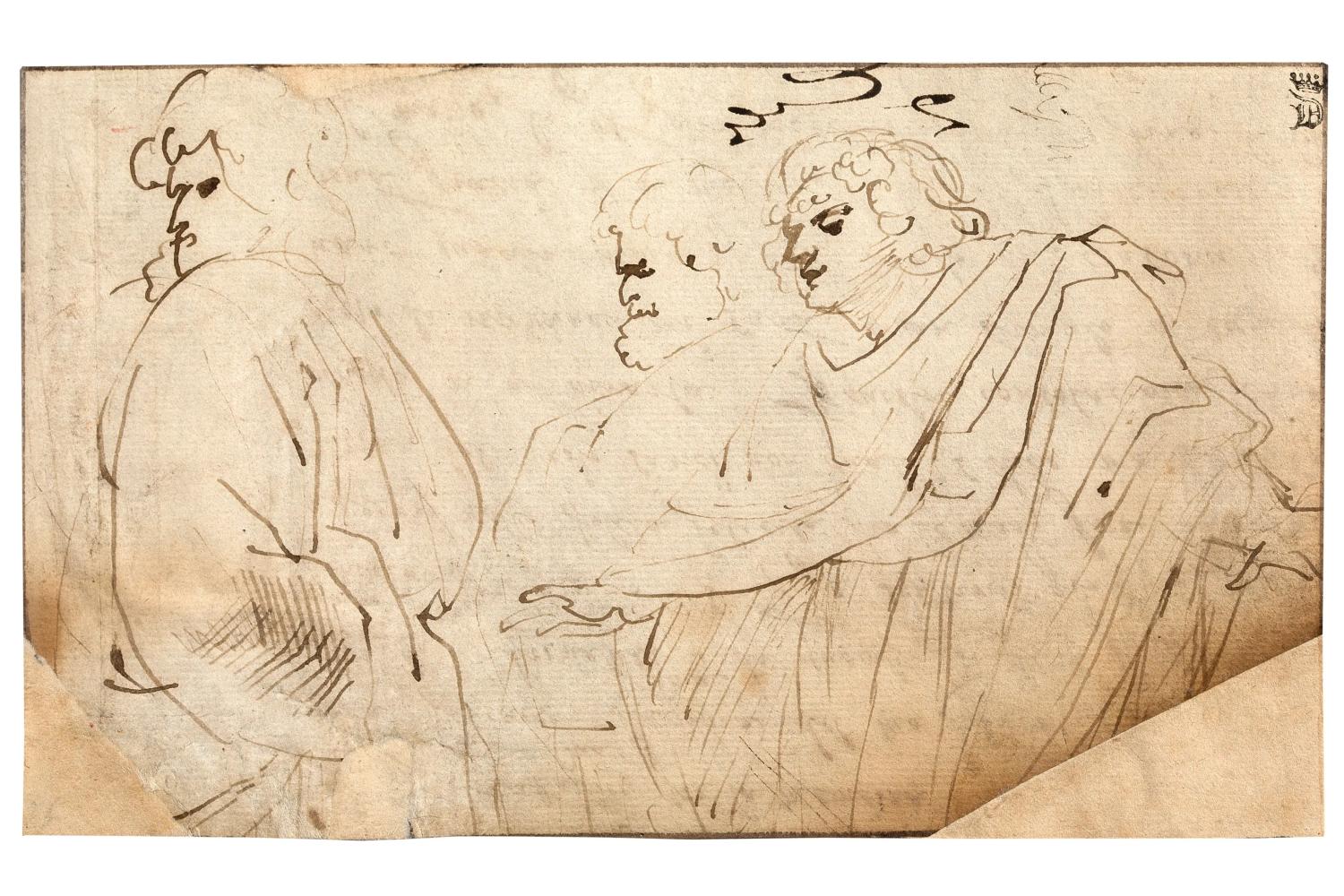
Like so many artists, Peter Paul Rubens was always drawing, even in his twenties during his time in Italy. Including on the back of a sheet with the draft of a formal letter he was writing. There is only one other known example worldwide of a double-sided work like this one by Rubens. 


Peter Paul Rubens (1577 - 1640)

Three Men in Traditional Robes (front), rough draft for a letter (back)

1607

Pen and brown ink on paper

Inquisitive Rubens

Rubens resided in Italy from 1600 to 1608: first in Venice, then in Mantua, and finally in Rome for several years. In Mantua and Rome, he was employed at the court of Duke Vincenzo I Gonzaga and his wife, Eleonora de’ Medici, both avid art collectors. Besides being a court painter, Rubens was also an advisor, an agent in art matters, and a mediator, 

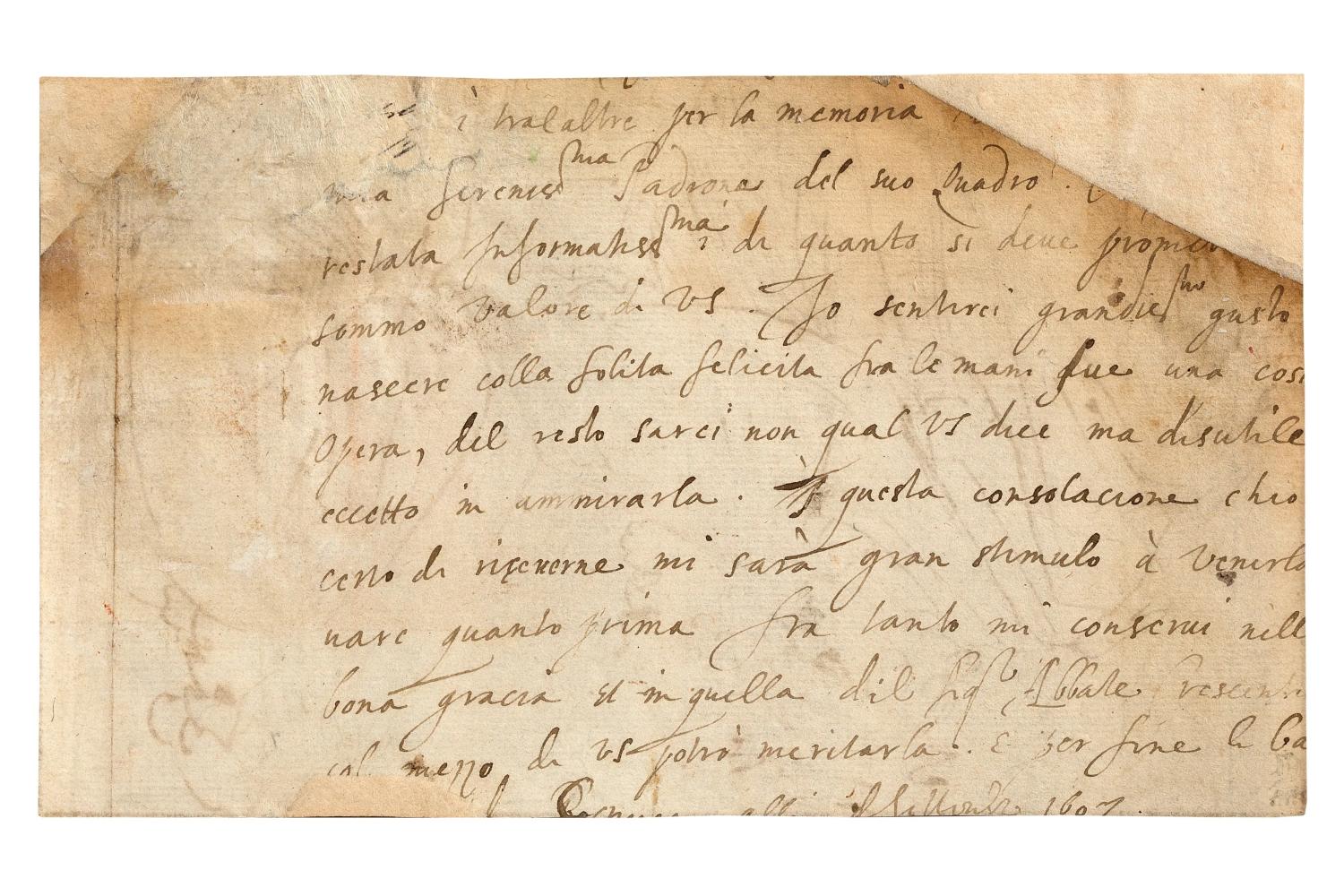
as evidenced by this draft letter from September 1607: Rubens requests an update from the painter Cristoforo Roncalli, nicknamed il Pomarancio (1551/1552-1626), on a commission from the duchess. He is very curious, he writes. Peter Paul and Cristoforo, who was much older, knew each other well. Unfortunately, we have no idea which work Rubens is referring to. The final letter was not preserved. 

Peter Paul Rubens, Three Men in Traditional Robes (front), rough draft for a letter (back), 1607, pen and brown ink on paper, Rubenshuis (on long-term loan from the King Baudouin Foundation), public domain
Database

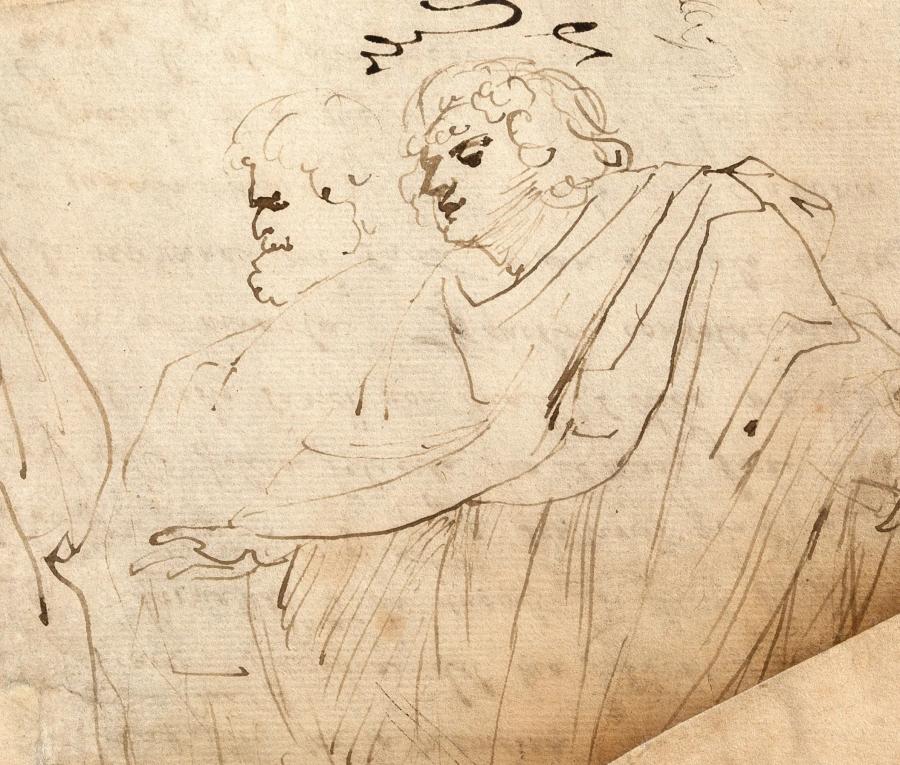
Around this time, Rubens had a spontaneous inspiration, a creative impulse: on the back of the sheet, he tested his pen – you can see this at the top right – after which he sketched three male figures in brown ink. This type of drawing is called a ‘crabbeling’. Rubens executes his idea confidently without much hesitation. 

Other drawings by Rubens include copies of existing artworks, but we cannot be certain that this is the case for this sketch. These drawings, along with Rubens’s own designs, later became a gigantic database of poses, gestures, characters... which he and his apprentices drew on for inspiration. 

A rare drawing

Who are these three men? We cannot link them to an existing work. They wear classic robes, two of them have beards, and the man on the right holds his arms open. Most likely, these are three apostles interacting with each other, and the man on the right is the young John. Such a sketch from Rubens’s Italian years is very rare. 

Peter Paul Rubens, Three Men in Traditional Robes (front), rough draft for a letter (back), 1607, pen and brown ink on paper, Rubenshuis (on long-term loan from the King Baudouin Foundation), public domain
Rubens the advisor

Back to the draft letter. It is a beautiful illustration of how Rubens was so much more than a painter. At Eleonora de’ Medici’s request, he supervised the works the duchess commissioned from his fellow painters while in Rome. Rubens monitored their progress, assessed paintings, and negotiated prices. In the letter, he mentions that he is very curious about the painting that Roncalli is working on:  

Peter Paul Rubens, Three Men in Traditional Robes (front), rough draft for a letter (back), 1607, pen and brown ink on paper, Rubenshuis (on long-term loan from the King Baudouin Foundation), public domain
... among other things, as a reminder ... / ... (my?) Most Serene Mistress and her painting. / [has] understood very well what exactly is due [to] / the exalted value of Your Grace. It would give me great pleasure [to see] / such a [beautiful?] / work born from your hands, with the usual luck; besides, I would not be what you say, but useless ... / except to admire it. In this consolation [I am] / sure to receive it; it will be a great incentive for me to [admire it] / as soon as possible. In the meantime, keep me in [your] / good favour and in that of Mr Abbate Crescenzi ... / With your help I will be able to earn it. And finally, I kiss your hands ...

Peter Paul Rubens to Cristoforo Roncalli

Up close and personal with Rubens

Based on all this, it is safe to say that this sheet with its two sides is most definitely a unique witness. The drawing lets us get up close and personal with Rubens; it is as if we are looking over his shoulder as he works on it. It tells us more about how he tapped into his creative well. The letter gives us a first-hand insight into what life in the art world was like in Rubens’s time, with Rubens serving as an advisor and manager to an important and powerful female (art) patron. 

Or how a simple sheet of paper can conceal an entire world...